In 2004, Sandro Bianco participated in developing the signage project for the 26th São Paulo Biennial, then integrating the team at Bookmark Brand. Working on design for the Biennial means working for one of Brazil's most important cultural institutions and an event that, since its creation in 1951, has placed São Paulo on the international circuit of contemporary art. The 26th edition, titled "Território Livre," took place between September and December 2004 in the Ciccillo Matarazzo Pavilion, in Ibirapuera Park, under the general curatorship of Alfons Hug and presidency of Manoel Francisco Pires da Costa. It brought together 141 artists from 61 countries and approximately 400 works. It was also the first São Paulo Biennial with free admission.
Designing the signage for a Biennial of this scale means simultaneously dealing with architecture, art, information, circulation, and thousands of visitors. The Ciccillo Matarazzo Pavilion, designed by Oscar Niemeyer and his team, has approximately 30 thousand square meters of exhibition space. Its open and continuous architecture creates a particular challenge for signage design: building hierarchy and orientation without visually competing with the architecture or the artworks.
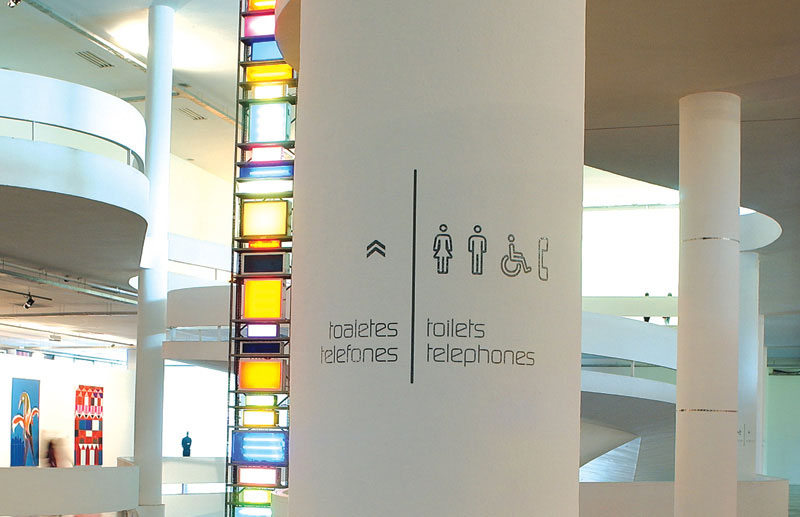
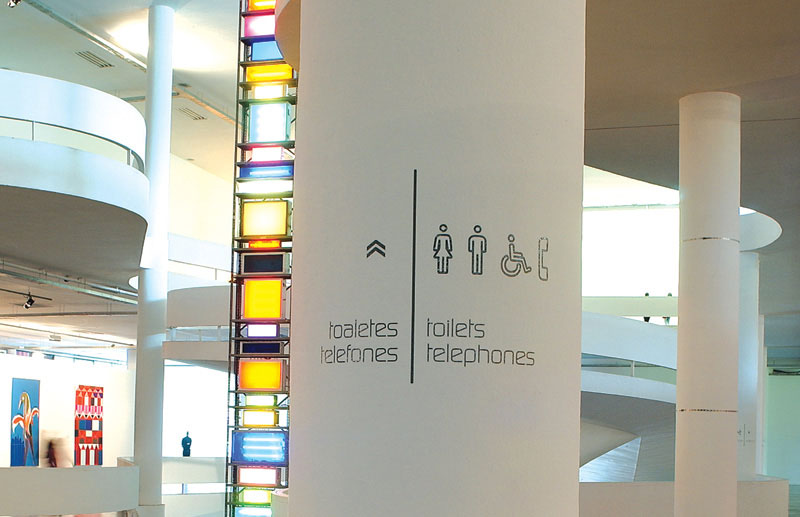
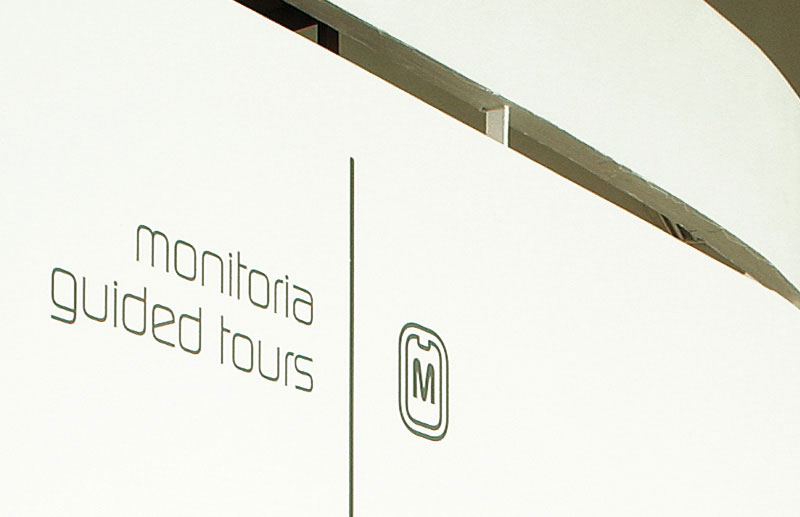
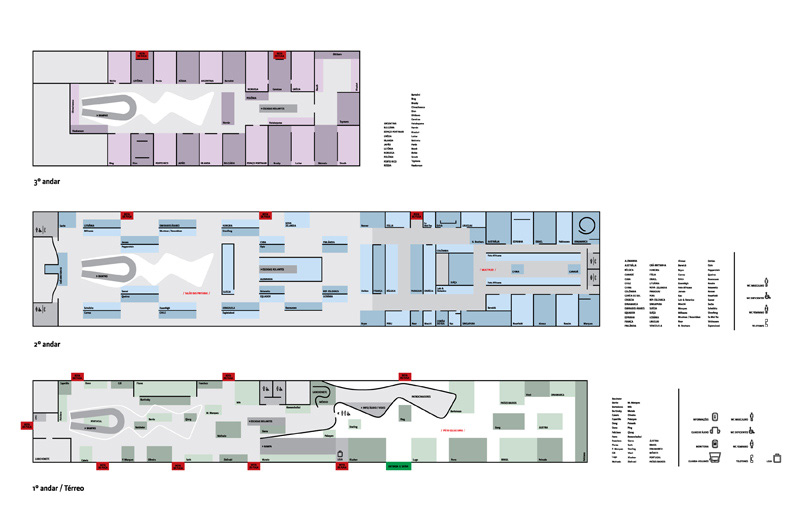
It was within this context that the work developed by Bookmark Brand with Sandro Bianco's participation needed to function as a true information layer over the Biennial's architecture. It was not simply about drawing signs. The system needed to orient the public between floors, sectors, national representations and service areas; identify artists and works; present curatorial texts in Portuguese and English; organize maps and flows; indicate restrooms, telephones, cloakrooms, monitoring, guided visits and audio guides; and establish a visual logic consistent enough to work in dozens of different situations.
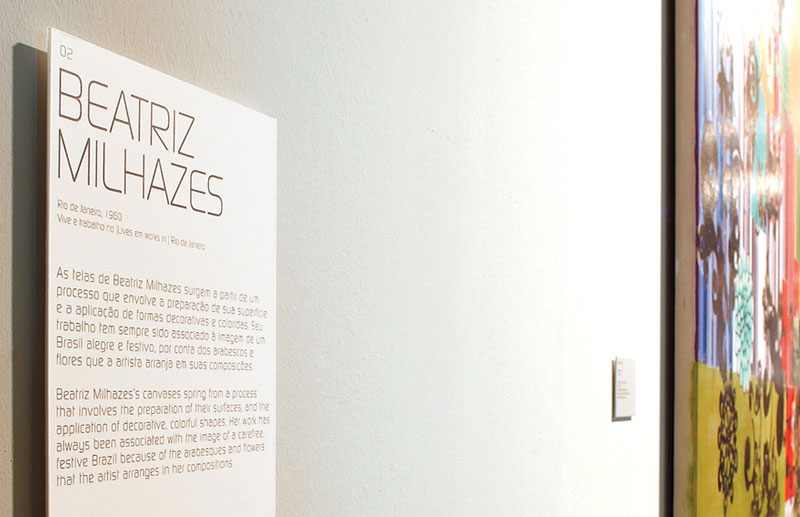
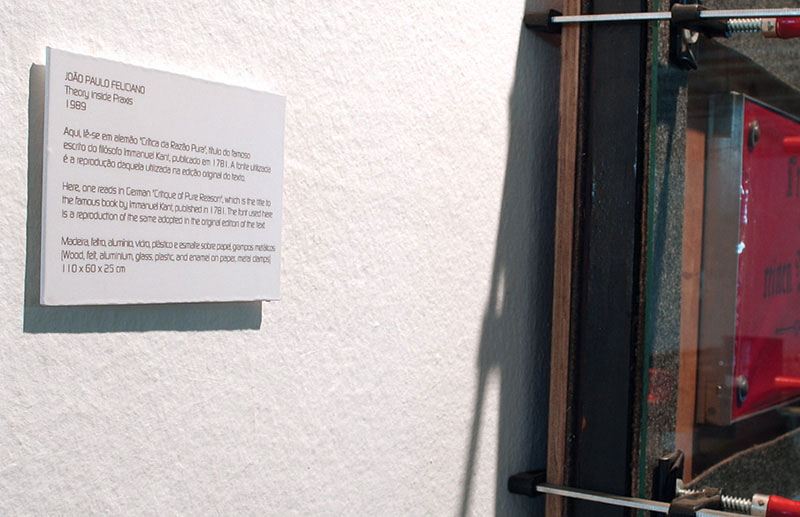
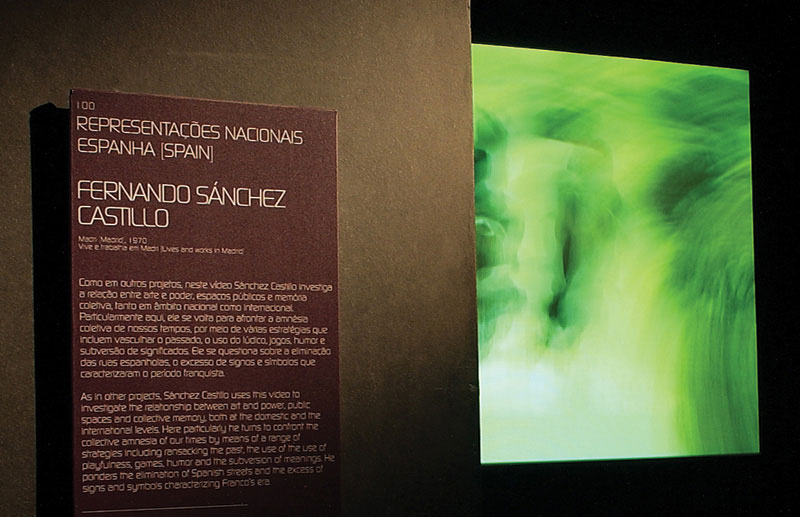
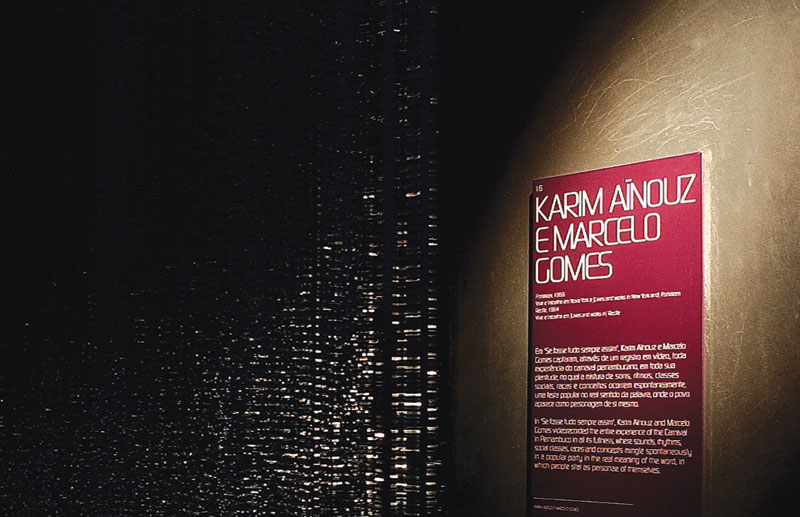
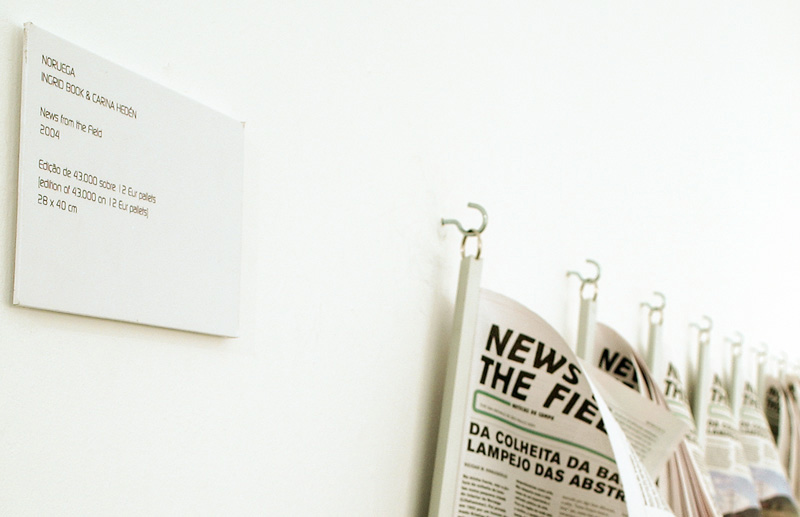
The editorial scale was also enormous. Each artist needed to be identified within a system capable of accommodating names, nationalities, biographical information, curatorial texts, titles, dates, techniques and translations, maintaining legibility and consistency even when the amount of information varied radically. Artists such as Beatriz Milhazes, João Paulo Feliciano, Fernando Sánchez Castillo, Karim Aïnouz and Marcelo Gomes, visible in the project records, coexisted with dozens of other languages, nationalities and exhibition formats. Design needed to create unity without homogenizing the diversity of the exhibition.
The adopted solution employed extremely economical graphic language. Typography, lines, pictograms, numbering and large areas of breathing space formed a visual vocabulary that could change scale without losing identity. Artist plates functioned almost as editorial pages transported into space; pictograms reduced complex functions to immediately recognizable signs; vertical lines organized information and direction; and typography simultaneously assumed functions of identity, orientation and hierarchy.
For Sandro Bianco, working on the signage for the 26th São Paulo Biennial meant acting at a scale where graphic design and space cease to be separate disciplines. Each sign, number, arrow, map, pictogram and text becomes part of a sequence. Design must anticipate questions, recognize decision points, understand distances, fields of vision and circulation flows, and establish different reading levels—from information perceived dozens of meters away to technical details read just centimeters from an artwork.
The 26th Biennial brought together painting, photography, sculpture, installation, video, performance and projects conceived specifically for the Pavilion. The system needed to coexist with an architecture temporarily transformed by hundreds of artistic interventions, without creating reading conflicts or interfering with the experience of the works. With approximately 917 thousand visitors, the responsibility of the signage was also public: the system needed to work for specialists, curators and art professionals, but equally for extremely diverse audiences.
Seen today within Sandro Bianco's trajectory, the 26th São Paulo Biennial represents a particularly important project for bringing together many of the disciplines that would later become recurrent in his work: visual identity, typography, editorial design, information architecture, wayfinding, signage, spatial experience and systems design. Before UX and information architecture became recurrent expressions in the digital universe, a project of this nature already demanded exactly this thinking: understanding an enormous amount of content, establishing hierarchies, anticipating paths and transforming complexity into orientation.
Participating in the visual construction of the 26th São Paulo Biennial meant much more than signage for a building. It meant helping to organize the experience of hundreds of thousands of people facing hundreds of works, dozens of countries and different ways of understanding art, within one of the most emblematic buildings of Brazilian modern architecture. It is a project that directly connects Sandro Bianco, graphic design, signage, contemporary art and São Paulo Biennial—and synthesizes an idea that would continue present in his trajectory and later in the thinking of SB\Design: translating complex systems into coherent design systems.