Not all developments begin with an advertising campaign. Some begin with a reserved invitation, a conversation between families, or a private presentation. In the world of ultra-luxury, exclusivity begins long before a contract is signed. It begins in the way a story is told. Developed by the traditional Victor Malzoni family, Santa Pazienza Country in Itatiba, São Paulo, was conceived as an ultra-luxury real estate development capable of integrating architecture, nature, golf, wellness, sustainability, and privacy in an experience designed for an extremely select audience.
Presenting a project of this scale required much more than producing a sales book. It was necessary to create an object capable of translating the Malzoni family's vision, communicating the quality of the professionals involved, and anticipating the experience that future owners would find at Santa Pazienza. With this mission, SB\Design, under the creative direction of Sandro Bianco, developed a presentation publication produced in a limited edition of only 150 copies, exclusively for families invited to experience the development. More than an institutional publication, the book was conceived to function as the first physical experience of the Santa Pazienza Country brand.
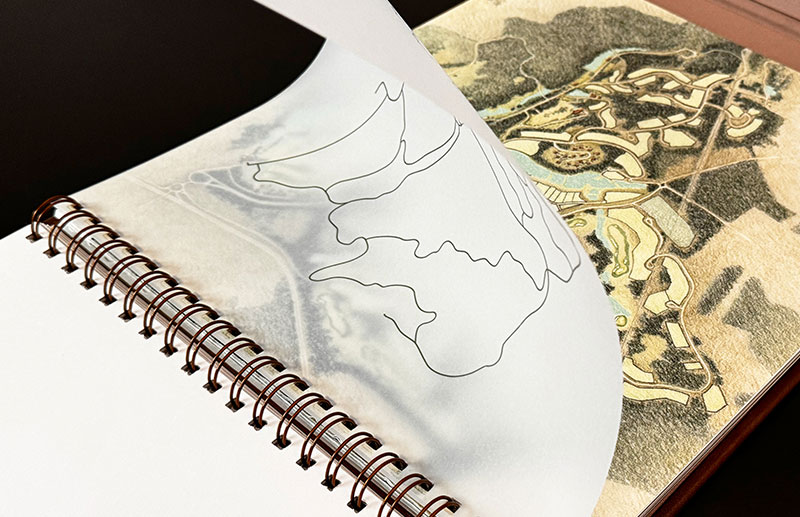
One of the project's greatest challenges lay far beyond editorial design. SB\Design needed to organize, interpret, and transform into narrative an extraordinarily complex and sophisticated set of information produced by international specialists in architecture, territorial planning, landscape design, sustainability, and golf course design. Under the creative direction of Sandro Bianco, territorial studies, masterplans, architectural projects, maps, illustrations, perspectives, landscape concepts, environmental strategies, and institutional content were brought together within a single editorial architecture.
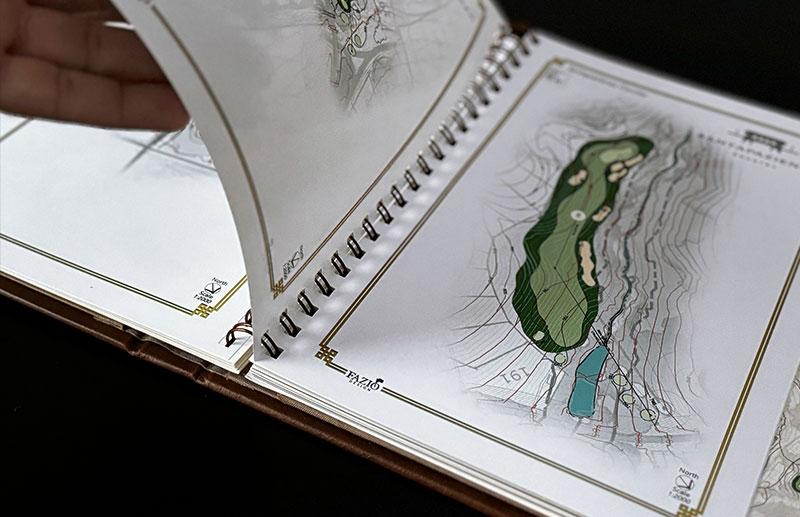
Throughout the book, the reader is introduced to Don Vita's vision, founder of VITA Planning and Landscape Architecture, responsible for the international planning of the development; the work of Ricardo Cardim and Alessandra Cardim, related to the integration of native vegetation and environmental recovery of the landscape; the international perspective of Liliane Stacishin, Head of Business Development at VITA; and the golf course project developed by Tom Fazio, one of the most internationally recognized names in this discipline. Each specialist produced content with different languages, scales, and objectives. The role of SB\Design and Sandro Bianco was to transform this diversity of knowledge into a single, coherent, and elegant narrative.
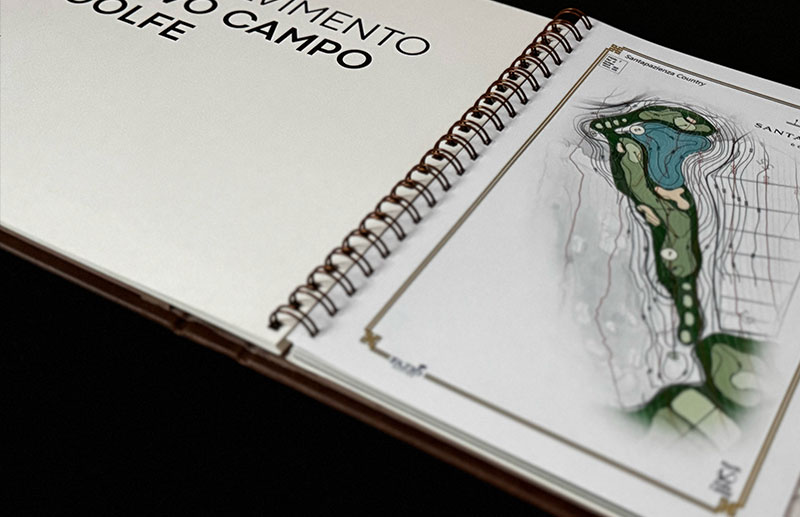
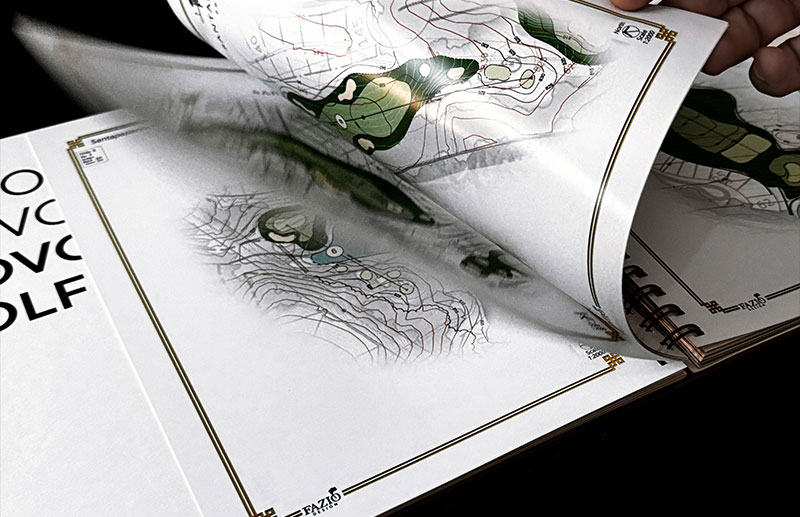
Much of this material had never been made publicly available. Masterplans, topographic studies, landscape concepts, golf course drawings, architectural illustrations, environmental strategies, and institutional information were developed specifically for Santa Pazienza and organized by SB\Design to present the complete vision of the development even before its commercialization. Each of the 150 books brought together information that until that moment had remained restricted to the teams involved in project development. More than a real estate catalog, the publication became a strategic relationship document, created to share a long-term vision with an extremely restricted group of families.
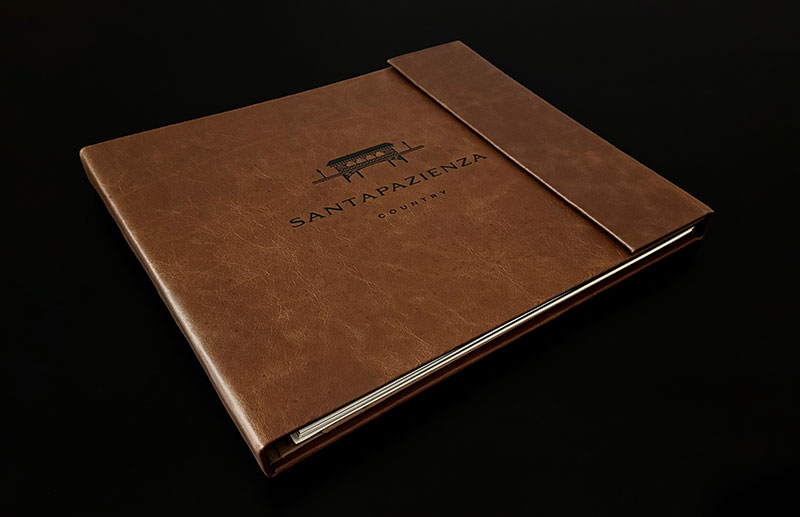
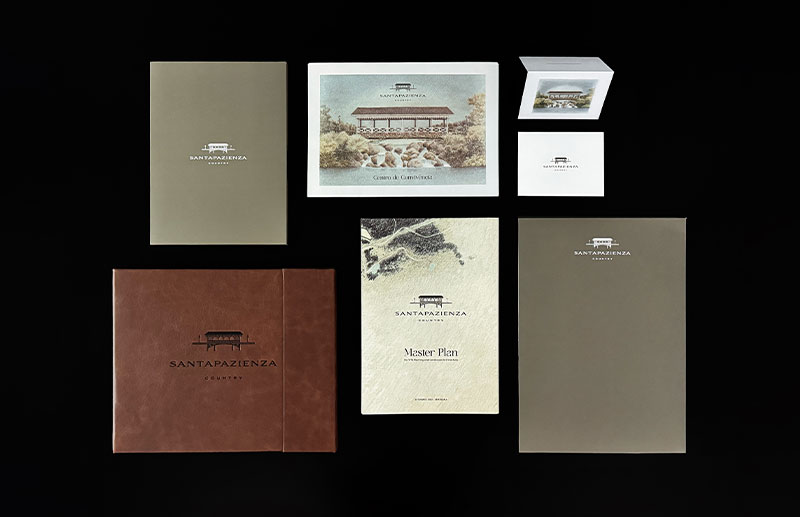
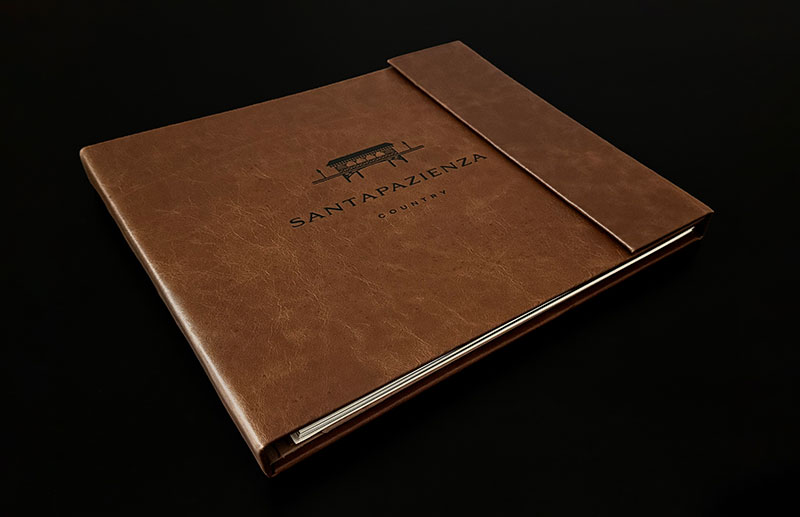
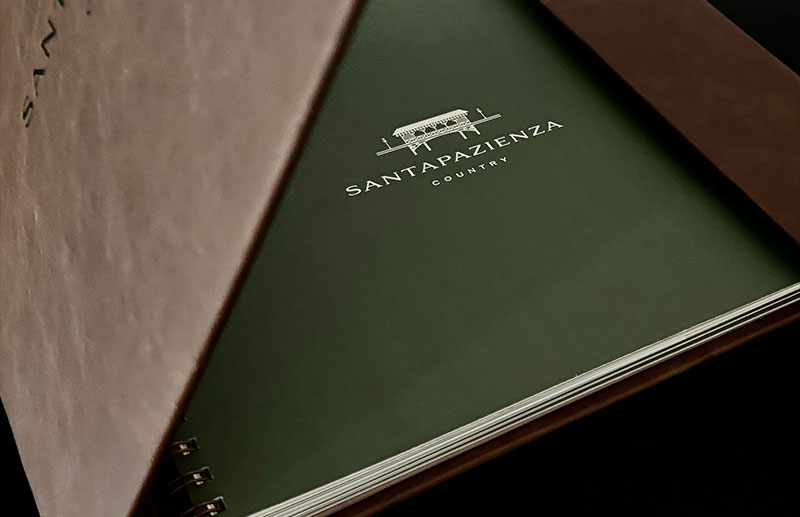
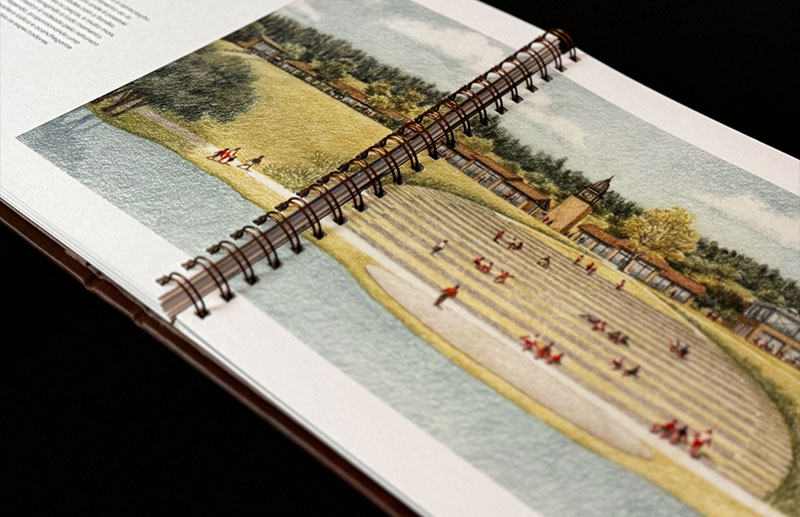
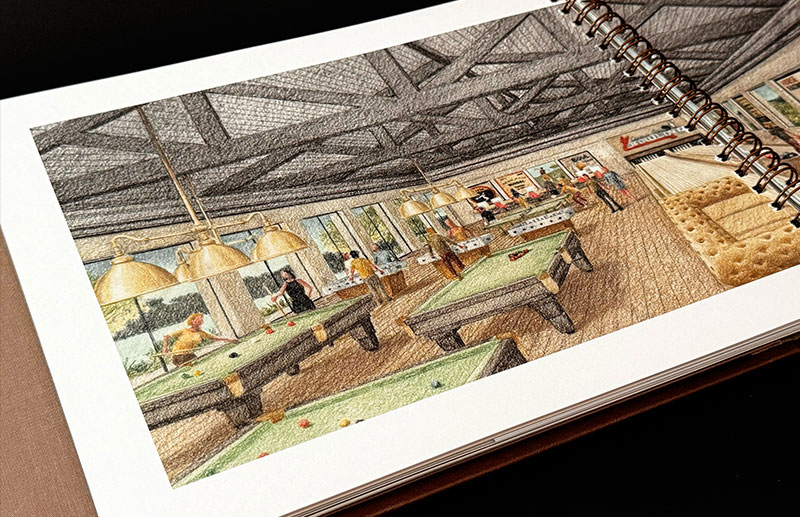
Every detail of the publication was designed to communicate permanence. The cover received natural leather coating with a discrete application of the Santa Pazienza brand. Binding, materials, special papers, pagination rhythm, typographic hierarchy, and graphic composition were carefully developed to transform the act of turning pages into a sensory experience. Throughout the pages, floor plans, maps, artistic perspectives, illustrations, photographs, and texts coexist in a balanced manner. The design avoids competing for attention with the content: it creates structure, rhythm, and silence so that architecture, landscape, and territory assume the protagonism.
This approach also differentiates the project from conventional real estate material. The publication was not conceived simply to sell land. It was created to present a vision about territory, architecture, landscape, sustainability, privacy, and legacy. By organizing this universe of information into a coherent editorial experience, SB\Design transformed technical complexity into narrative, using editorial design, information architecture, art direction, and graphic production as instruments to communicate emotion, confidence, and exclusivity.
For Sandro Bianco and SB\Design, Santa Pazienza also represents the accumulated experience in projects related to luxury real estate, real estate branding, architecture, hospitality, editorial design, and high-standard real estate developments. In this territory, design must understand that luxury does not mean excess. It means precision, choice, materiality, context, and attention to detail. The Santa Pazienza book was built exactly from this principle: not to impress through the volume of graphic resources, but to remain relevant through the quality of the content and the way that content was presented.
Produced in only 150 copies, the book was conceived for an extremely restricted audience. This scale completely changes the nature of the project. It was not mass communication, but an individual relationship between development and guest. Each book functioned simultaneously as presentation, document, collector's item, and material expression of Santa Pazienza's values.
The result is one of the most sophisticated editorial projects developed by SB\Design under the creative direction of Sandro Bianco. A work in which exclusive content, information architecture, editorial design, art direction, special materials, and high-standard graphic production were brought together to materialize the Victor Malzoni family's long-term vision and present one of the most singular ultra-luxury developments created in the interior of São Paulo.
The book was not created simply to sell. It was created to present a vision, establish a relationship, and transform information into desire.