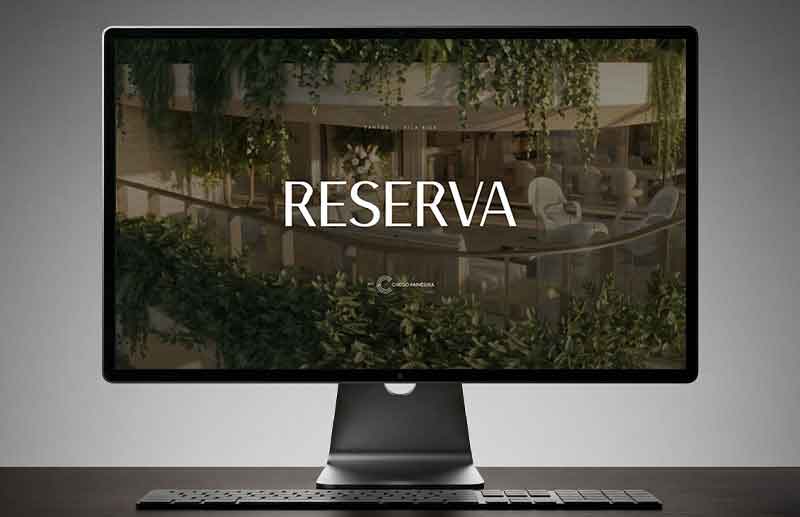
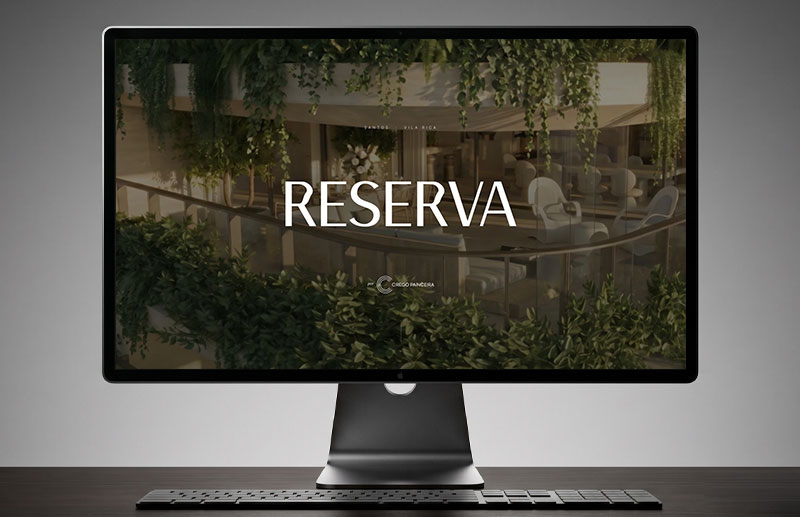
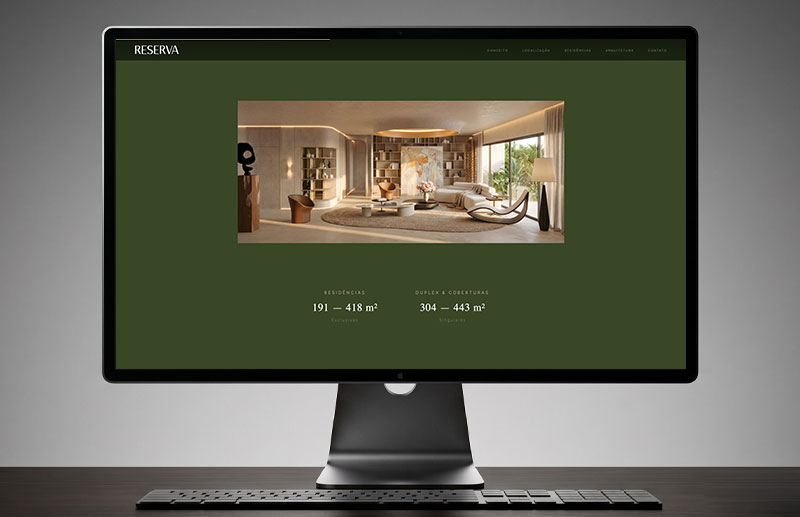
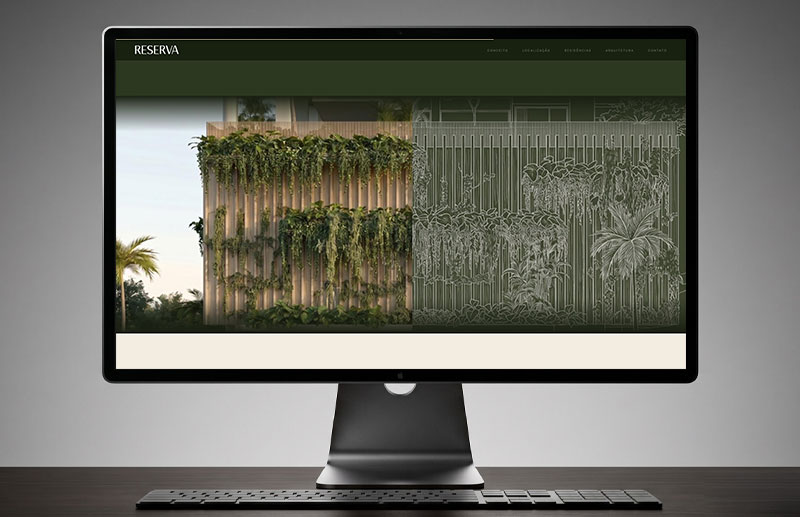
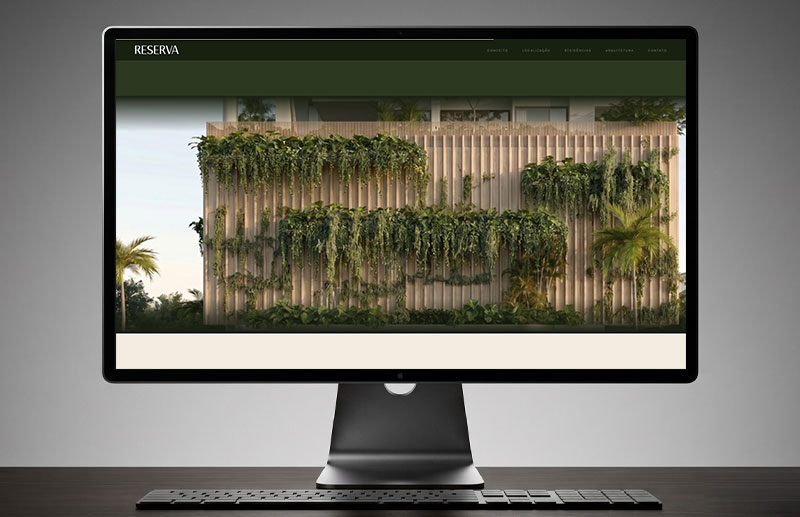
Reserva Vila Rica is a high-standard residential development by Crego Painceira located at Rua Minas Gerais, 62, in Vila Rica, Santos, across from Tênis Clube de Santos and steps from the sea. The address is part of one of the city's most valued regions and helps define the project's own positioning: a real estate product in which location, architecture, nature, exclusivity and quality of life must be perceived as a single experience. The development features residences ranging from 191 to 418 m², plus duplexes and penthouses from 304 to 443 m², with architecture marked by large verandas, vegetation, and attention to natural lighting.
Behind Reserva is Crego Painceira, a family-owned construction and development company whose history begins with José Miguel Crego Painceira, born in Santa Marta de Ortigueira, Spain. After working in construction in Santos and Praia Grande, José Miguel founded the company in 1976. Over five decades, Crego Painceira evolved from vacation buildings to high-standard residential developments, maintaining principles the company associates with careful land selection, natural lighting and ventilation, materials, construction quality and relationship with surroundings. The company remains family-led, and today its projects are signed by Studio Mariana Crego, continuing this trajectory through a new generation.
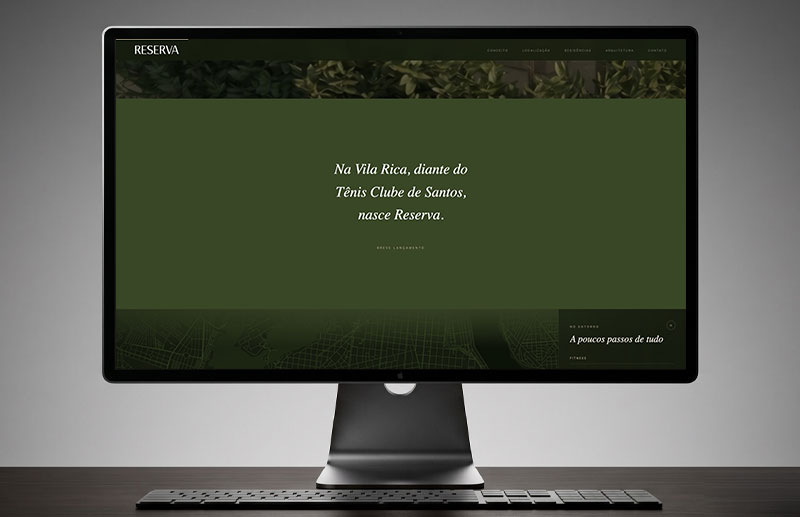
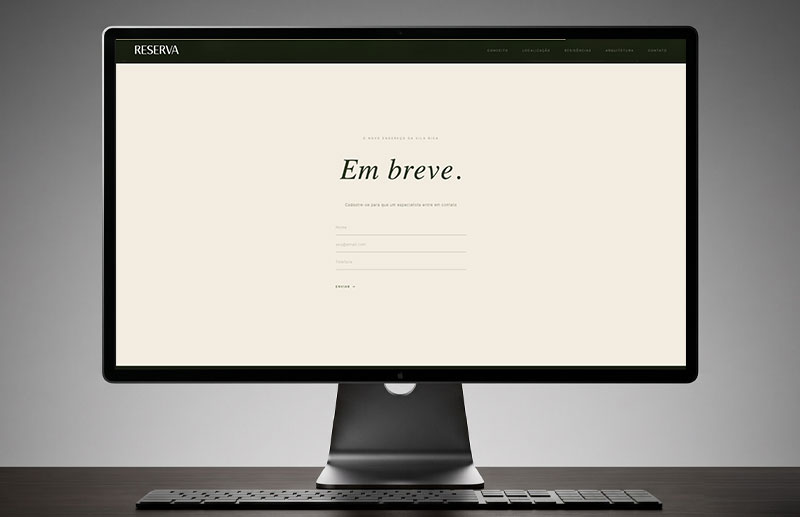
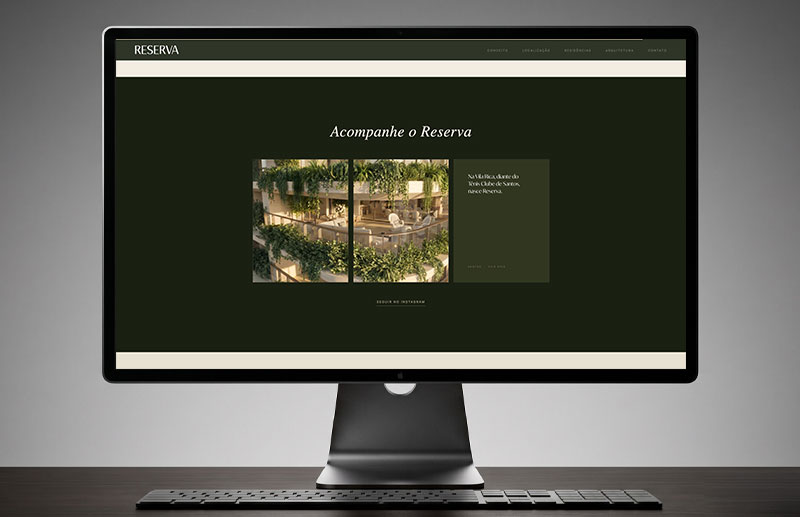
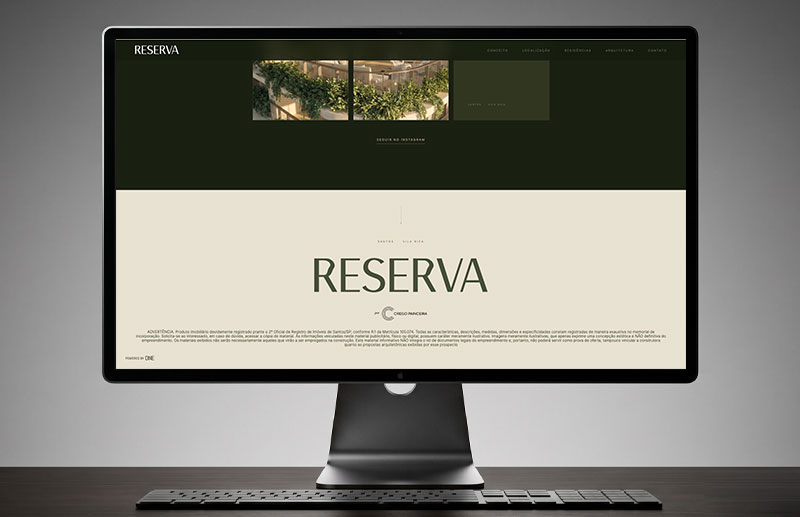
It was within this context that Sandro Bianco and SB\Design, at the invitation of agency ONE, developed in 2026 the first digital experience for Reserva Vila Rica. At this stage, the project did not yet envision a complete website for the development, but rather the creation of a pre-launch landing page, conceived as a digital teaser capable of presenting the Reserva Vila Rica universe, generating anticipation and establishing a first relationship between the development and its audience before the future complete platform. SB\Design was responsible for UX/UI design, information architecture, digital art direction, responsive design and construction of the landing page experience, organizing content, images, location and project attributes in a concise, sophisticated narrative suited to the positioning of a high-standard residential development.
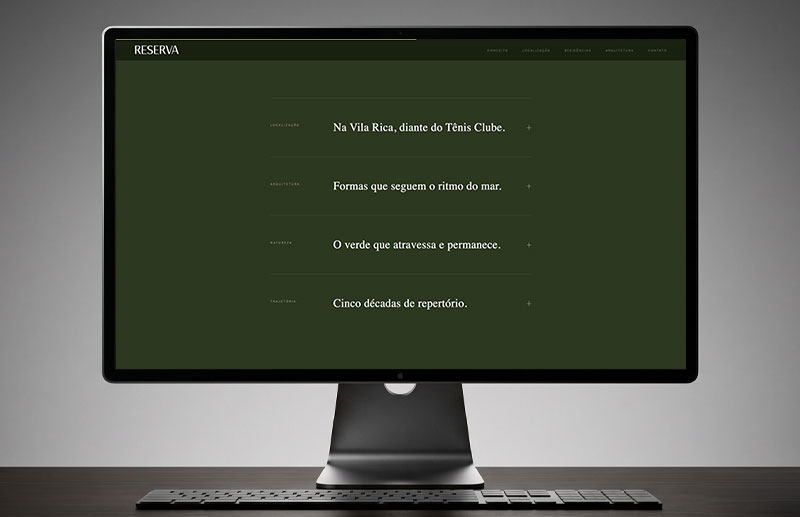
More than a static waiting page, the landing page was conceived as a moving digital experience. Animations, transitions and scroll-based effects guide users progressively through the content, creating rhythm and revealing information as navigation advances. Motion is part of the interface's own language: elements appear, shift and reorganize during scroll, creating an experience closer to an editorial and audiovisual presentation than to a conventional real estate page. For Sandro Bianco and SB\Design, movement, interface and art direction work together to enhance the perception of quality, care and exclusivity associated with Reserva Vila Rica.
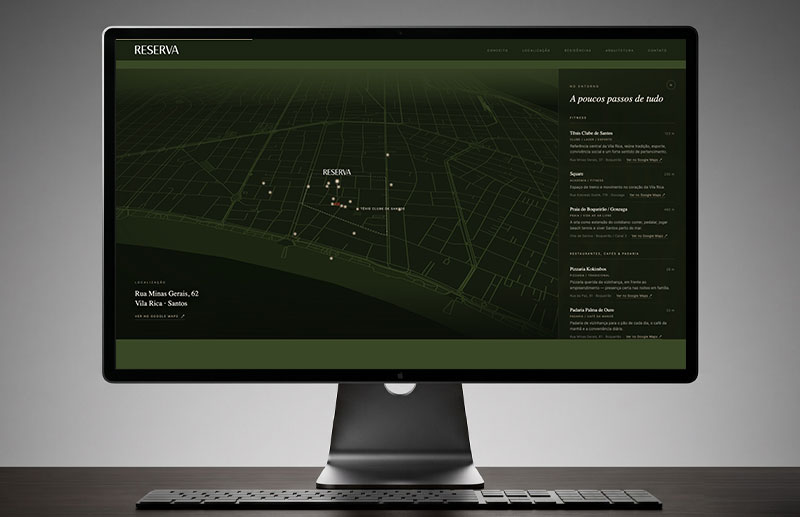
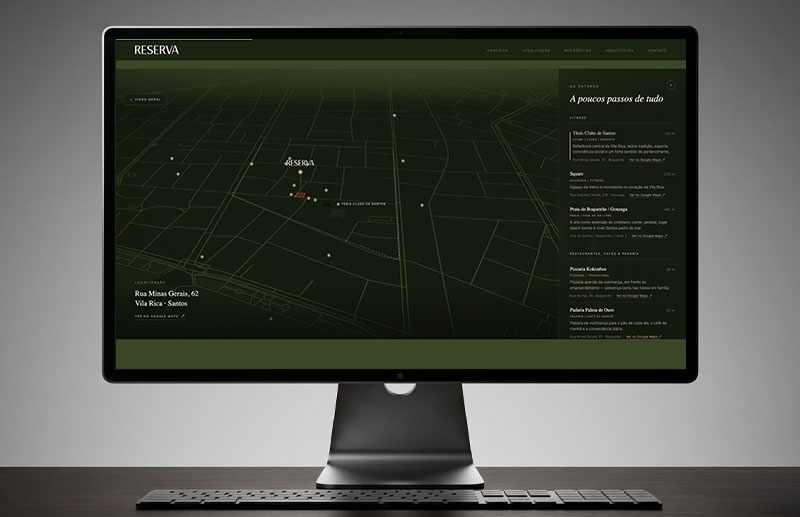
One of the key elements of the experience is the interactive map, developed to transform the development's location into content and value argument. Instead of simply indicating an address, the landing page presents a guide to places near Reserva Vila Rica, allowing visual understanding of its relationship with the neighborhood, the sea, services, gastronomy, culture, leisure and relevant points in the region. The map functions simultaneously as an orientation tool, editorial content and demonstration of the urban context in which the development is located. Thus, location ceases to be merely technical information and becomes part of the project's digital narrative.
The work reinforces an area increasingly present in Sandro Bianco and SB\Design's practice: digital experiences for real estate, developers, builders and high-standard real estate developments. Even in a pre-launch landing page, UX/UI decisions, motion design, information architecture, responsive design and interaction can directly contribute to the perception of a real estate brand. In Reserva Vila Rica, the first digital presence was conceived as an anticipation of the future development experience: less an informative page and more a first contact with the place, its architecture and surroundings.