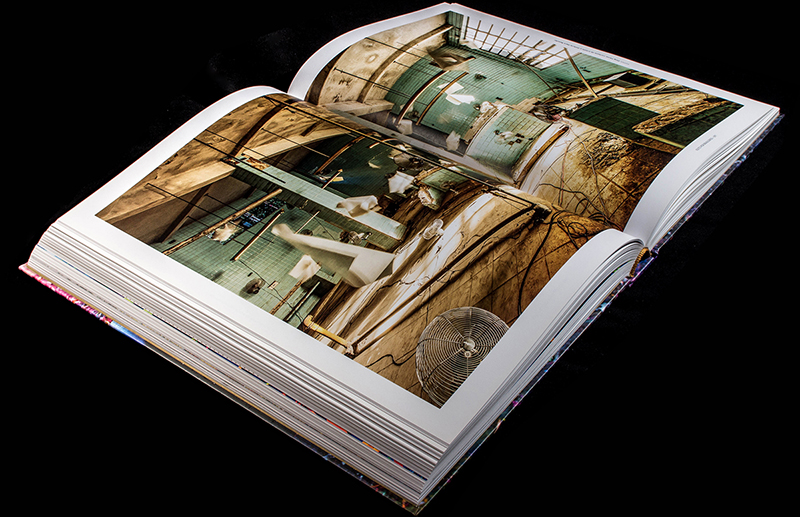
In 2014, one of São Paulo's most symbolic architectural complexes returned to the city's life. After remaining closed for approximately two decades, the former Umberto Primo Hospital, known as Hospital Matarazzo, opened its pavilions, corridors, rooms and gardens to Made by... Feito por Brasileiros, a contemporary art occupation idealized by Alexandre Allard that preceded the transformation of that territory into Cidade Matarazzo. For several weeks, approximately 27,000 square meters of historical heritage ceased to be a dormant space to host one of the most ambitious cultural experiences undertaken in São Paulo during that period.
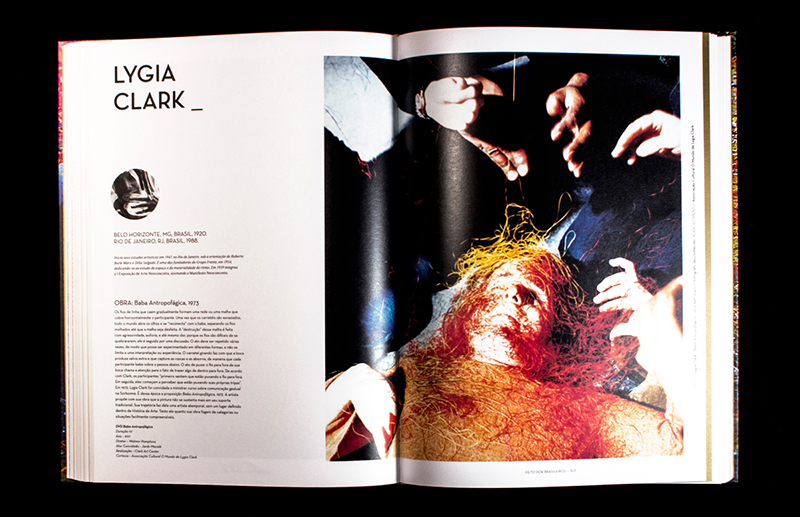
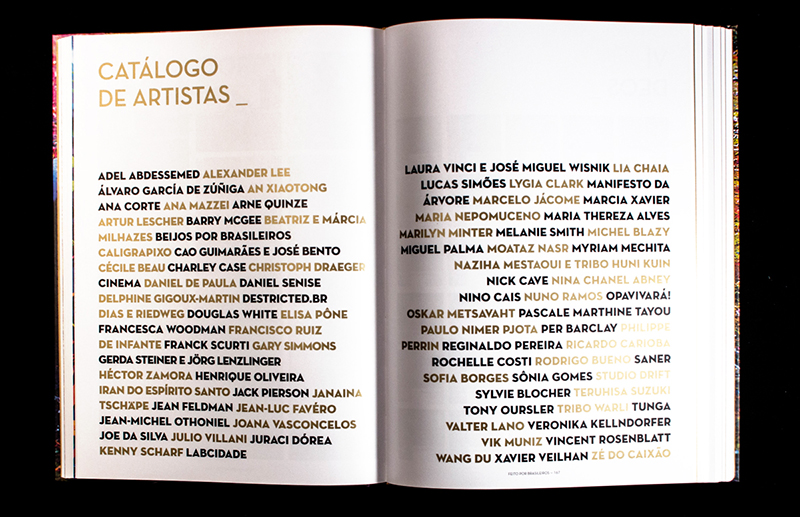
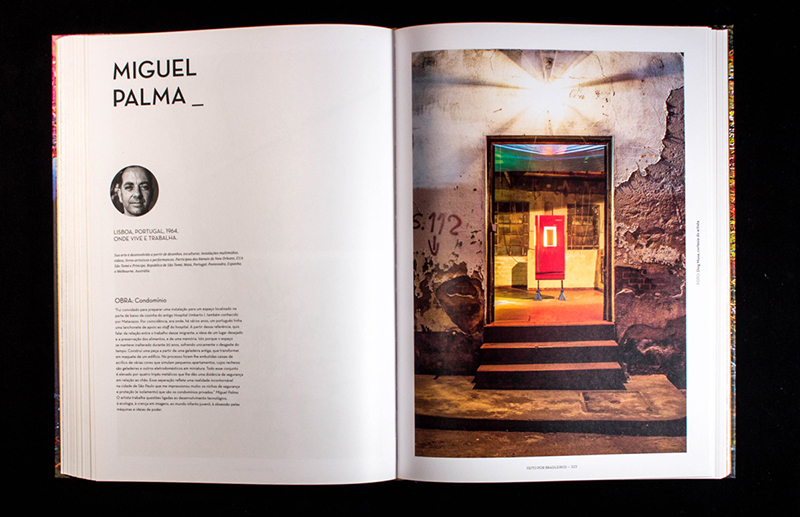
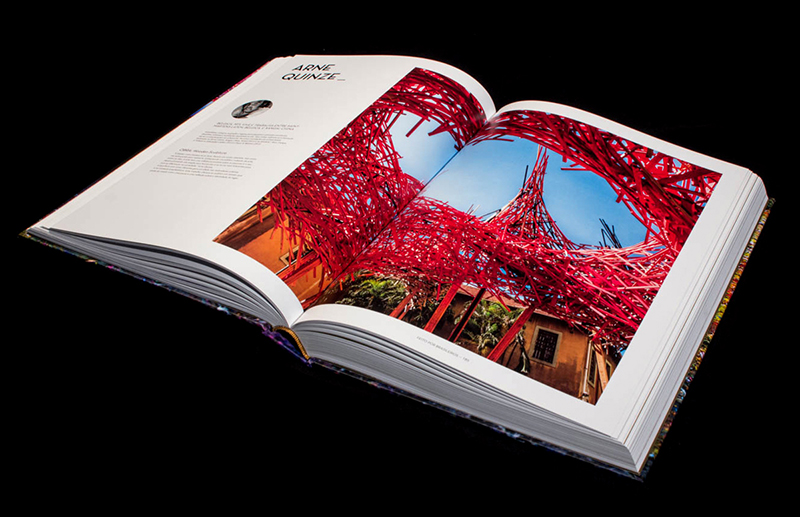
Over one hundred Brazilian and international artists participated in the exhibition, many of them producing site-specific works in direct dialogue with the memory, architecture, marks of abandonment and stories accumulated by the former hospital. Marc Pottier was the central figure in curating and artistic direction, with special projects associated with names such as Simon Watson, Nadja Romain, Gabriela Maciel, Andres Sheik, Pascal Pique, Baixo Ribeiro, Ana Pato and Marcelo Rezende.
The exhibition also represented a decisive moment in the recent history of that territory. For Alexandre Allard, ideologist of Cidade Matarazzo and the Made by... project, the occupation functioned as a statement about the possibility of reactivating historical heritage through creativity. The exhibition marked one of the first major public openings of the complex before its transformation and placed the former Hospital Matarazzo back in São Paulo's imagination. Years later, Cidade Matarazzo would continue its development involving international names such as Jean Nouvel and Philippe Starck.
The result extended beyond specialized circles. The exhibition attracted approximately 120,000 people, according to production records, and received recognition from the São Paulo Association of Art Critics, APCA, as the Cultural Initiative of 2014 in the Visual Arts category. It was a temporary occupation, but its impact remained as part of the city's recent cultural memory.
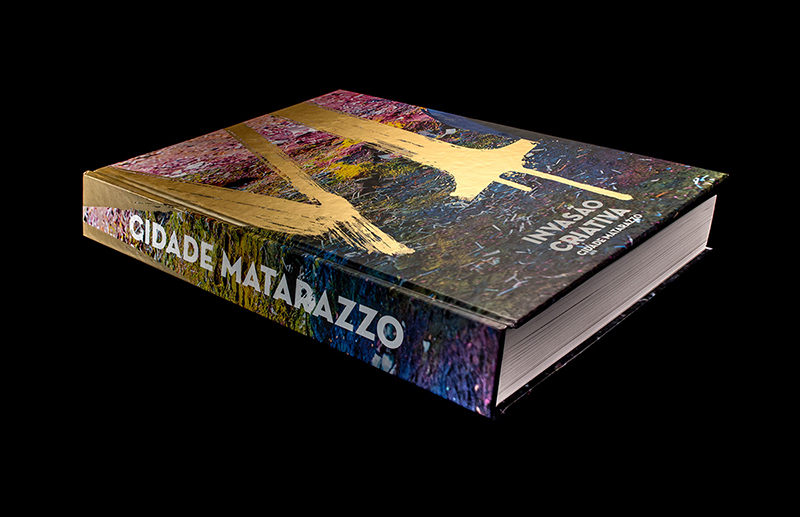
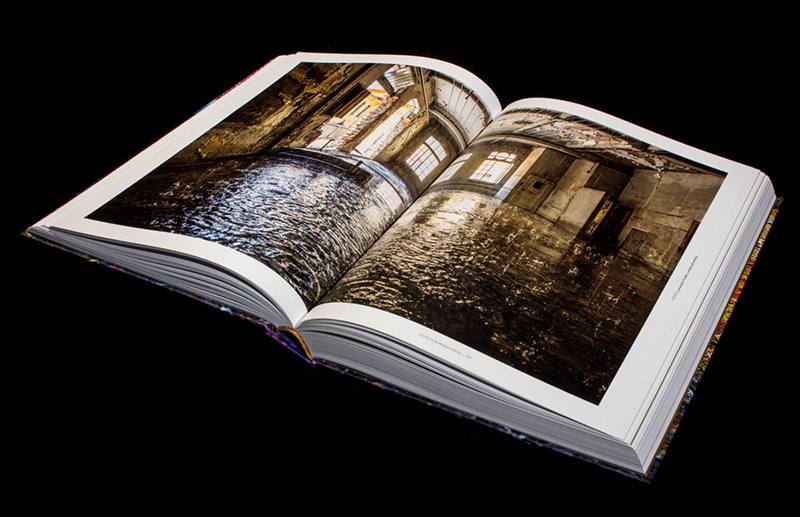
It was in this context that Sandro Bianco and SB\Design received another challenge: transforming an essentially spatial, artistic and temporary experience into an object capable of remaining. If the exhibition existed through the scale of Hospital Matarazzo, its walls, corridors, rooms, gardens, ruins, artworks and interventions, the book needed to find a completely different way to reconstruct that experience. It was not simply about producing a catalog. It was about creating a second architecture for Made by... Feito por Brasileiros.
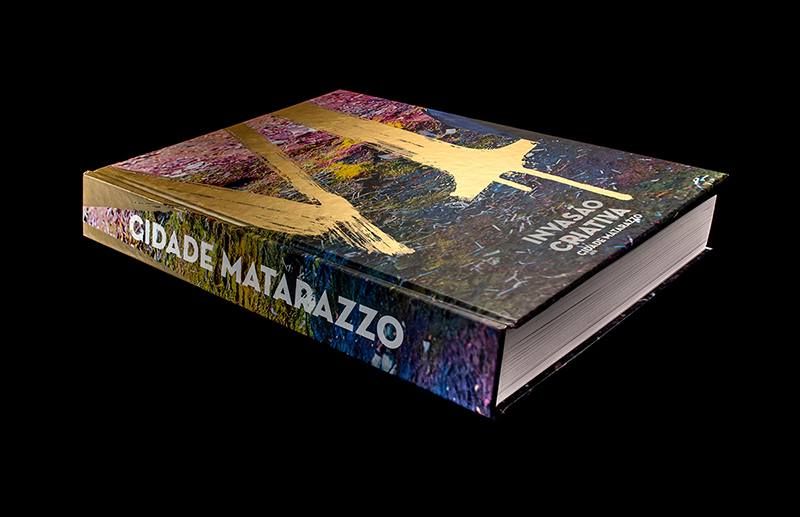
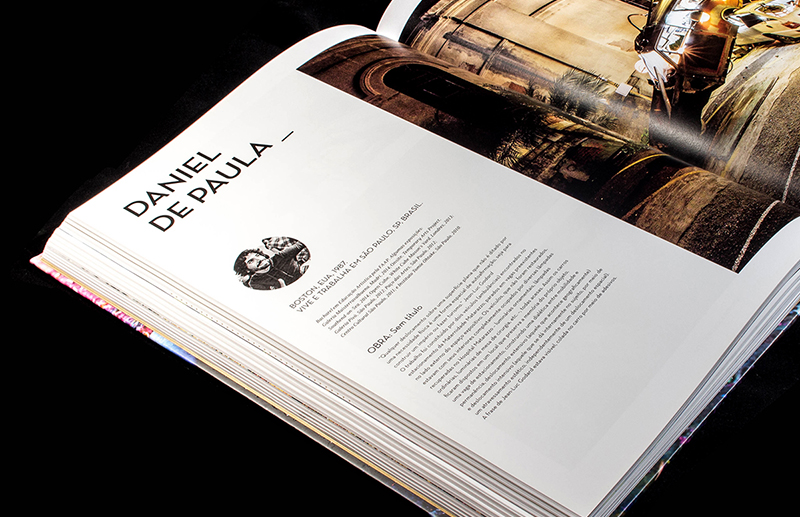
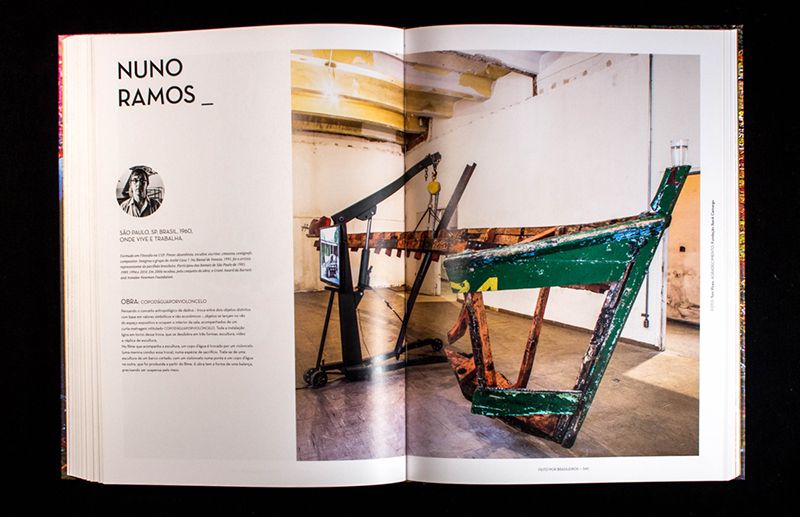
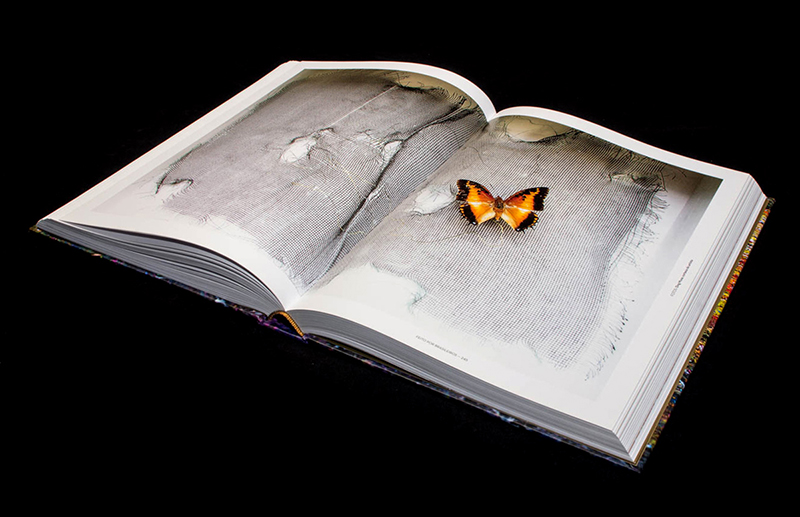
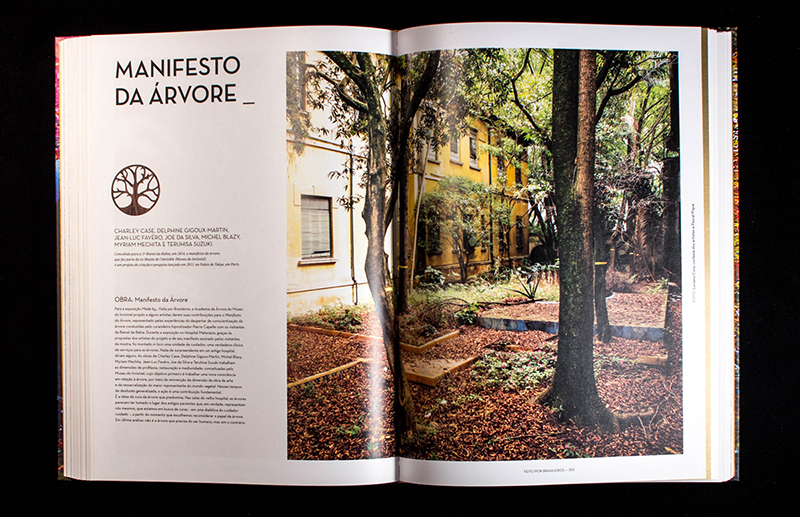
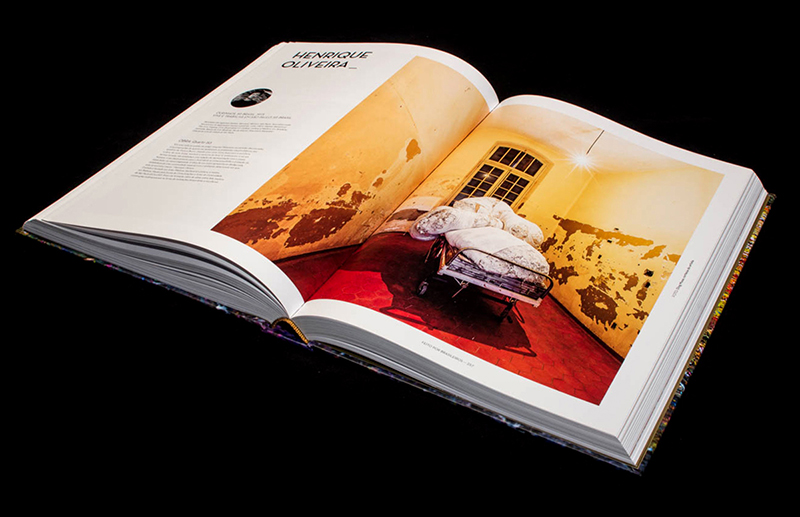
The editorial project developed by SB\Design, under the creative direction of Sandro Bianco and in collaboration with designer Marcio Pontes, took almost a year of work. The result was a publication of approximately 500 pages, conceived as a large visual archive of the exhibition and, simultaneously, as an autonomous graphic work. Photographs, artworks, artists, texts, documents, architecture, memory, assembly records and different scales of information needed to coexist within a single editorial system. The volume and heterogeneity of this content made the project a radical exercise in editorial design, information architecture and art direction.
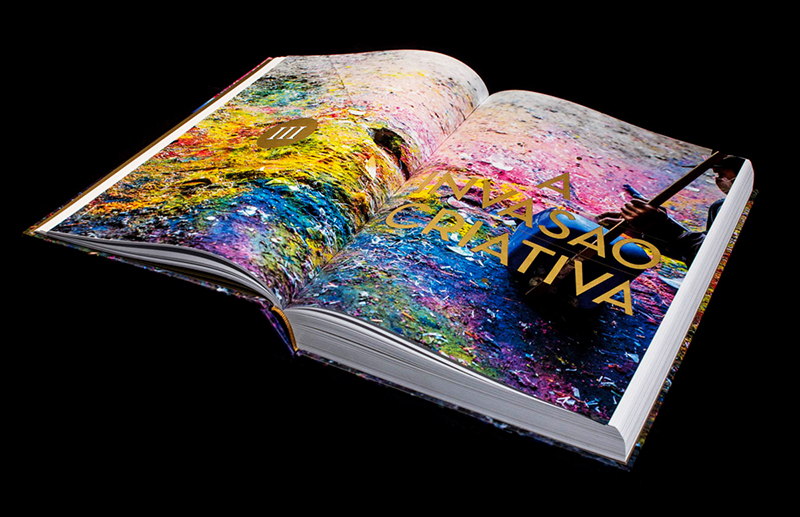
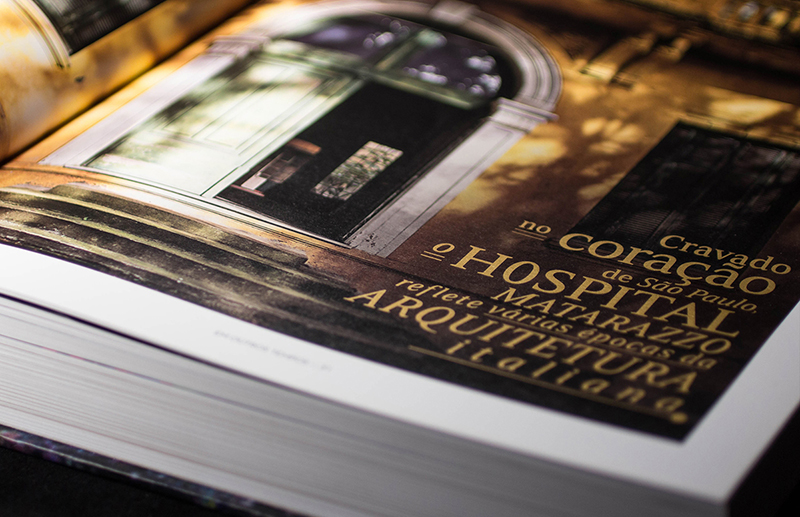
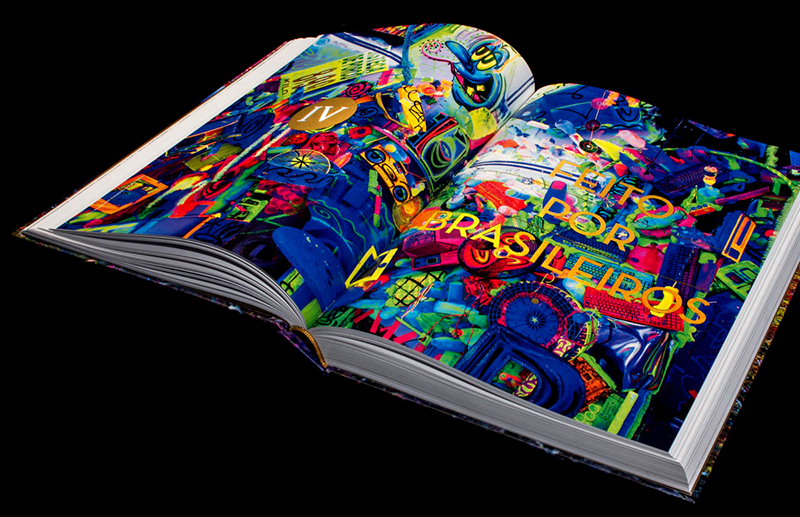
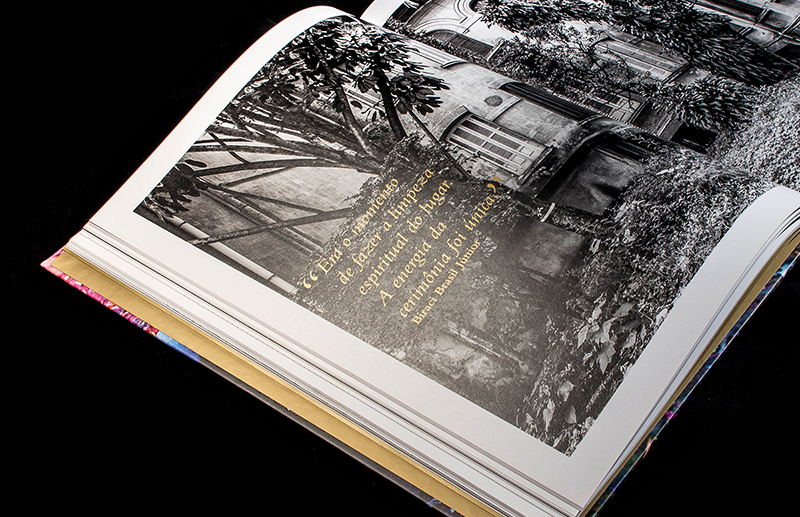
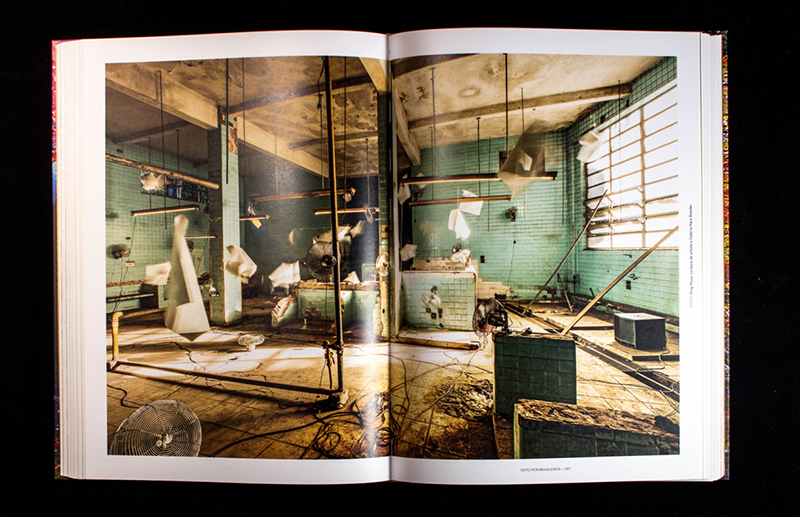
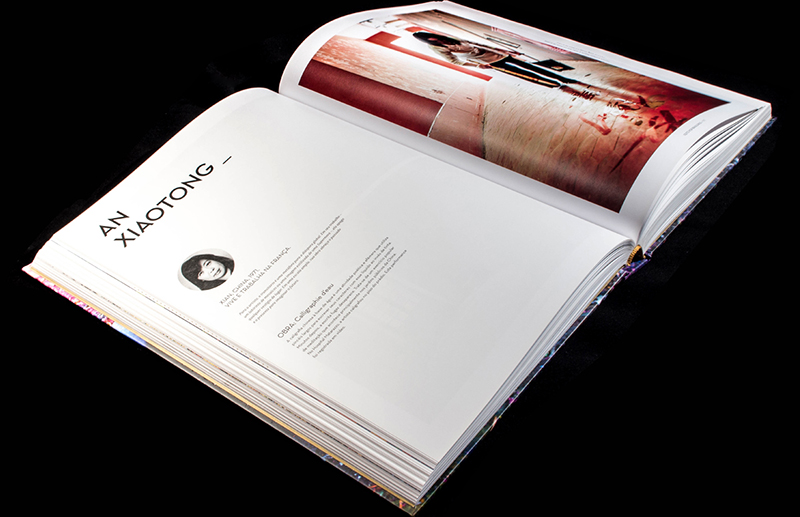
The exhibition did not possess a single language. And the book could not pretend to possess one. The graphic system created by Sandro Bianco, SB\Design and Marcio Pontes stems precisely from this tension. Instead of imposing uniformity across hundreds of pages, the grid functions as an infrastructure capable of receiving radically different situations. There are silent pages and pages of enormous visual intensity. Photographs occupy entire spreads while other compositions work with text, detail, scale, void and rhythm. Typography, image, negative space and graphic elements construct different reading speeds.
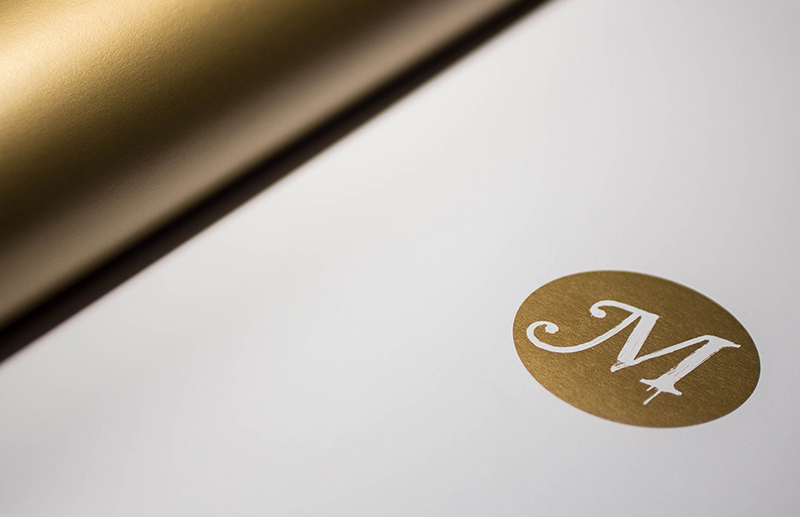
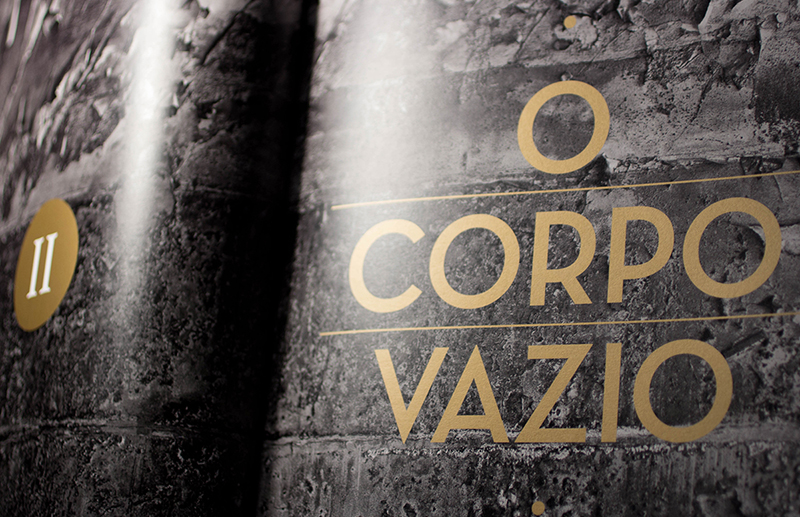
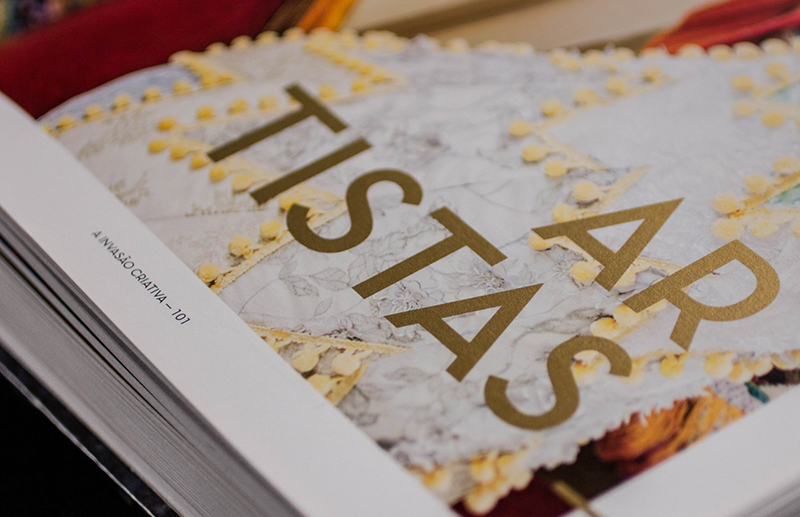
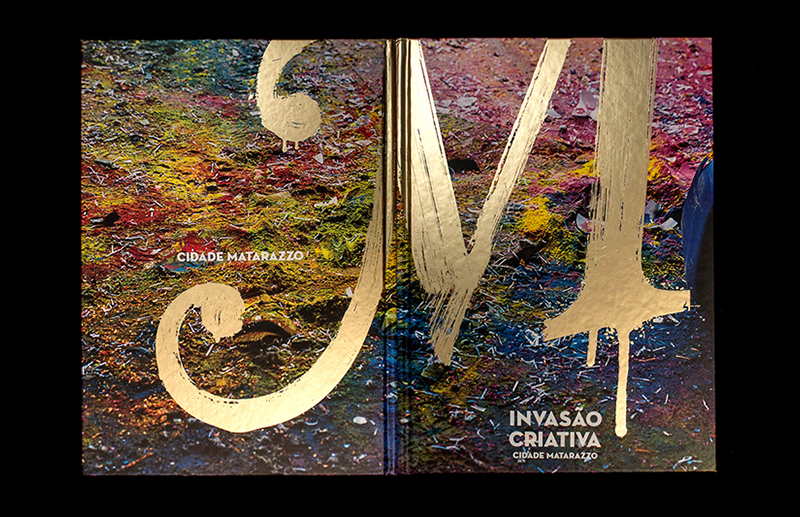
Gold appears as a recurring element, creating a connection between the materiality of the editorial object, the identity of Made by... and the monumentality of the exhibition itself. On the cover, in the box, in the openings and in the graphic details, finishing and content become part of the same narrative. The grid needed to be rigorous enough to organize almost 500 pages and flexible enough not to neutralize the personality of over one hundred artists. This contradiction became one of the central ideas of the project.
The Made by... book demonstrates a recurrent characteristic in Sandro Bianco and SB\Design's work: translating complex systems into coherent design systems. In this case, the original system was extraordinarily complex. A historical hospital. Dozens of spaces. Over one hundred artists. Site-specific installations. Photography. Architecture. Performance. Video. Text. History. Memory. Brazilian and international art. Editorial design became the structure capable of connecting these different layers.
There is a direct relationship between the work of Alexandre Allard, who imagined the occupation and transformation of that territory, the curating that brought together artists of different origins and the work of Sandro Bianco and SB\Design, responsible for transforming the exhibition experience into a permanent editorial narrative. What existed physically for just a few weeks came to exist within approximately 500 pages.
Most of the works in Made by... were conceived specifically for that moment and that space. The ephemeral nature of the exhibition made the record especially important. When the doors closed, Hospital Matarazzo began another chapter in its history. The book remained. It preserved artists, artworks, architecture, events and atmospheres that could not be reconstructed in the same way. In this sense, the work of Sandro Bianco, Marcio Pontes and SB\Design exceeded the conventional function of editorial design. The book became part of the memory of the exhibition itself.
Today, observing the publication means revisiting a specific moment in the cultural and urban transformation of São Paulo: the instant when an abandoned hospital was occupied by thousands of people before transforming into Cidade Matarazzo. Made by... Feito por Brasileiros was a temporary exhibition. The book was designed to remain.