In 2019, as the Brazilian market began paying closer attention to alternative proteins and plant-based foods, Wessel decided to investigate a territory that seemed to sit at the opposite extreme of its own history. The Wessel family has worked with meat for five generations, tracing back to 1830 in Hungary, and gained a new chapter in Brazil when László Wessel opened the family's first butcher shop in São Paulo in 1958. His son, István Wessel, became one of the most recognized figures in the country's meat segment, while the next generation, led by Daniel Wessel, participated in the expansion and modernization of the business. This history was always associated not merely with meat, but with the ability to anticipate shifts in behavior, consumption formats, and new ways of presenting the product. It was within this culture of experimentation that MetaFoods was born—a new brand created by Wessel to investigate the growing universe of plant-based foods. For Sandro Bianco and SB\Design, the challenge was especially compelling: creating a plant-based brand born precisely from a company whose authority had been built over decades around meat. The answer could not simply replicate the visual codes already established by vegetarian brands. It was necessary to build an identity with its own personality, capable of speaking about a broader transformation in people's relationship with protein, food, pleasure, and choice.
MetaFoods' strategy was developed in partnership with 55_Brands, while Sandro Bianco and SB\Design took responsibility for building the visual identity, brand system, art direction, and concept for the first packaging line. The central idea was synthesized in the expression Plant-Based Life. MetaFoods should not communicate renunciation or build its narrative exclusively around ceasing to consume meat. The brand should represent an expansion of possibilities within food. This difference guided the entire visual system. MetaFoods functioned as the master brand and MetaBurger as its first product expression, establishing an architecture prepared for future portfolio extensions. The symbol created from the "M" functions simultaneously as signature, monogram, and proprietary element, appearing independently as MF. The institutional dark green establishes a connection with the plant universe without assuming the generic appearance often associated with the category, while MetaBurger's orange introduces energy, appetite appeal, and recognition. For Sandro Bianco, the intention was not simply to design a logo or packaging, but to create a visual grammar capable of sustaining a new food brand and supporting its growth.
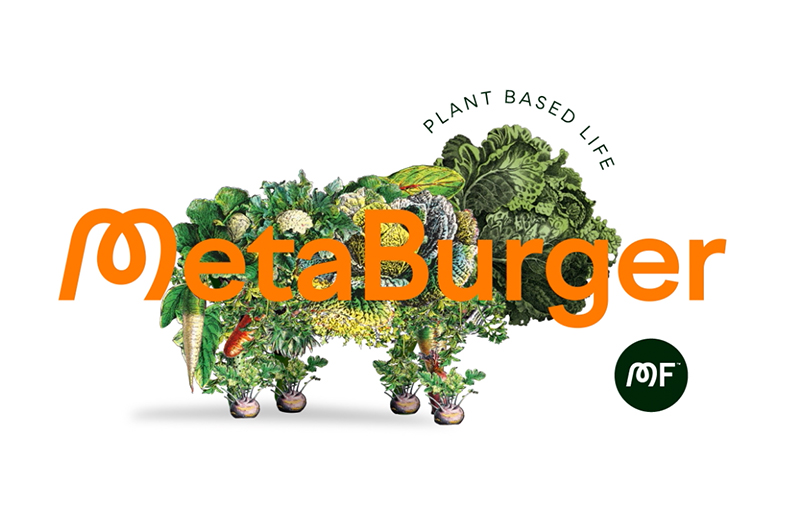
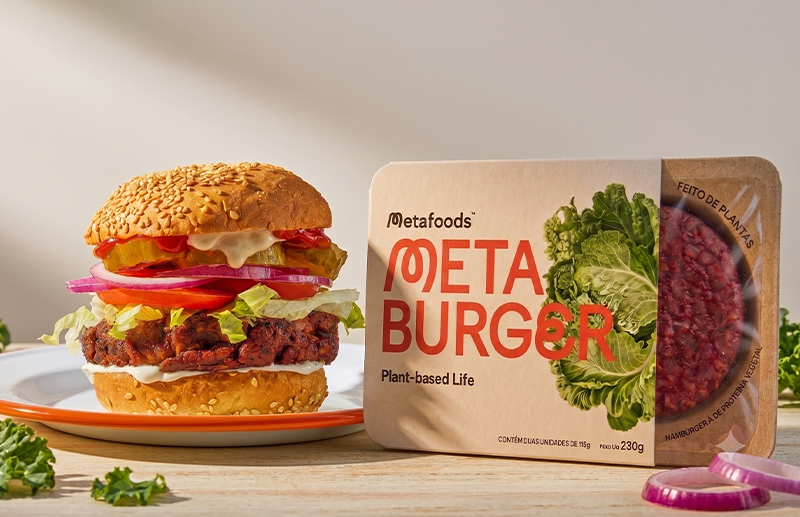
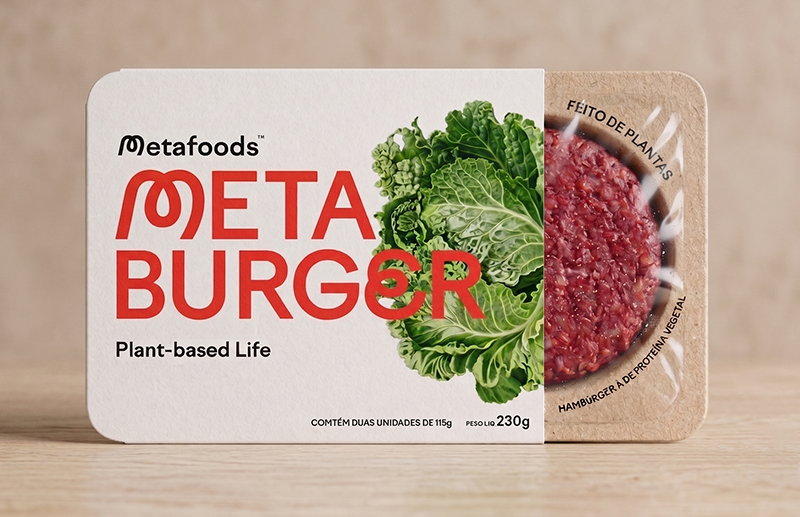
One of the most characteristic elements of the language created by SB\Design appears in the art direction. Vegetables, leaves, roots, tomatoes, kale, broccoli, and other ingredients are combined to visually construct different animals. The image deliberately creates a paradox: that which traditionally represents the origin of meat is now formed precisely by the ingredients meant to replace it. The animal remains present in the consumer's imagination, but its substance has been completely transformed. The idea allows numerous compositions and establishes a proprietary visual territory for campaigns, communication, products, and future brand extensions. In MetaBurger's packaging, SB\Design worked with an even more direct solution. Typography assumes dominant scale, the plant image interferes with the letters, and a side window physically reveals the burger. Brand, category, and product are understood almost simultaneously. The Plant-Based Life signature once again expands the narrative, positioning MetaFoods not merely as a veggie burger, but as a possible platform for a new generation of foods.
MetaFoods also represents a recurring characteristic in Sandro Bianco and SB\Design's work: using design to transform a business strategy into a visual system prepared to grow. The project brought together the historical experience of Wessel, the strategy developed with 55_Brands, and Sandro Bianco's creative direction, investigating how a company deeply rooted in meat culture could participate in a transformation beginning to gain relevance in the global food industry. The project was ultimately interrupted by the client before its commercial launch and never reached the market, remaining as a conceptual project. Nevertheless, MetaFoods documents a relevant moment of investigation and innovation within Wessel and SB\Design's portfolio: an attempt to rethink protein, product, packaging, and brand without abandoning an essential element of the eating experience—the pleasure of eating.